
Steel Grades for Cold Forged Parts
Steel Grades for Cold Forged Parts: SWRCH18A, 16MnCr5 and 20MnCr5 Compared
The best steel for a cold forged part depends on how much the metal must deform and how hard the finished surface must be. SWRCH18A is a low-carbon cold heading steel that forms easily. 16MnCr5 and 20MnCr5 are chromium-manganese case-hardening steels that give a hard, wear-resistant surface after heat treatment but are tougher to form.
This guide compares the three on composition, forming behaviour, heat treatment and typical use.
What Makes a Steel Suitable for Cold Forging
Cold forging presses steel at room temperature, so the material must flow without cracking. Good cold forging steels share these traits:
- Low to moderate carbon. Lower carbon means softer, more ductile steel that flows into the die with less force.
- Clean steel. Few inclusions, so cracks don’t start inside deep deformation.
- Good surface quality. Cracks and seams on the wire or bar can open up during forming.
- Controlled microstructure. Many alloy grades are supplied annealed (often spheroidised) to be soft enough to form.
Harder or higher-alloy steels need more force, wear tooling faster and may need more forming stages or intermediate annealing.
SWRCH18A: Low-Carbon Cold Heading Steel
SWRCH18A belongs to the Japanese JIS standard for carbon steel wire rod for cold heading and cold forging. The “18” refers to a carbon level of roughly 0.18%.
Typical character
- Low carbon, around 0.15–0.20%
- Very good cold formability
- Lower forming loads and longer die life than alloy steels
- Suitable for complex shapes and deeper deformation
- Moderate strength on its own, and can be carburised for a harder surface where the design needs it
Typical uses: fasteners, sockets, pins, housings and general cold formed components where forming ease matters more than very high strength.
16MnCr5: Case-Hardening Chromium-Manganese Steel
16MnCr5 (material number 1.7131) is a European case-hardening steel specified in EN 10084.
Typical composition (approximate)
- Carbon: about 0.14–0.19%
- Manganese: about 1.0–1.3%
- Chromium: about 0.8–1.1%
Typical character
- Chromium and manganese give good hardenability
- After carburising and quenching, the surface becomes hard while the core stays tough
- Harder to cold form than SWRCH18A, so it usually needs a soft (annealed) starting condition and robust tooling
- Widely used in automotive transmission and steering components
Typical uses: gears, shafts, bearing cups, races and parts that face contact stress and wear.
20MnCr5: A Step Up in Hardenability
20MnCr5 (material number 1.7147) is a close relative of 16MnCr5 with slightly more carbon and chromium.
Typical composition (approximate)
- Carbon: about 0.17–0.22%
- Manganese: about 1.1–1.4%
- Chromium: about 1.0–1.3%
Typical character
- Higher core strength and deeper hardening than 16MnCr5
- Slightly harder to form, with higher tool loads
- Chosen for heavier sections or higher loads
Typical uses: larger gears, heavily loaded shafts and components where core strength and case depth must be higher.
Composition ranges are approximate and quoted from the standards. Always check the current edition of the relevant standard and your customer’s drawing for exact limits.
Side-by-Side Comparison
| SWRCH18A | 16MnCr5 | 20MnCr5 | |
|---|---|---|---|
| Type | Low-carbon cold heading steel | Case-hardening alloy steel | Case-hardening alloy steel |
| Carbon (approx.) | 0.15–0.20% | 0.14–0.19% | 0.17–0.22% |
| Alloying | Plain carbon, low alloy | Cr, Mn | Higher Cr, Mn |
| Cold formability | Excellent | Good, in annealed condition | Moderate, in annealed condition |
| Forming load / tool wear | Lowest | Higher | Highest of the three |
| Surface hardness after treatment | Moderate, can be carburised | High after carburising | High after carburising |
| Core strength | Moderate | Good | Higher |
| Best for | Complex shapes, deep forming, cost efficiency | Wear-resistant parts under contact stress | Heavier, higher-load parts |
How Heat Treatment Fits In
Most of these steels reach their final properties only after heat treatment.
- Case hardening (carburising). Carbon is added to the surface at high temperature, then the part is quenched and tempered. The result is a hard outer layer with a tough core. It is the standard route for 16MnCr5 and 20MnCr5 parts such as bearing cups and races.
- Annealing before forming. Alloy steels are often annealed so they are soft enough to cold form.
- Distortion. Parts can change shape slightly during hardening, so dimensions that must be exact are usually finished by grinding or machining afterwards.
Read more on our heat treatment page, and see what can go wrong in our guide to improper heat treatment in automotive components.
Surface Preparation Before Forming
Whatever the grade, cold forging needs a lubricant layer that survives the pressure. Steel is usually phosphate coated and then soap lubricated. Alloy grades with higher forming loads benefit most from a good coating. Our guide to zinc vs manganese phosphating explains the process.
How to Choose the Right Grade
Ask these questions in order:
- What does the part do? A sliding or contact-loaded surface points to a case-hardening grade. A simple structural part may not need one.
- How hard must the surface be, and how deep? This sets the heat treatment and the grade.
- How severe is the forming? Deep, complex shapes favour easier-forming steels like SWRCH18A, or more forming stages and annealing for alloy grades.
- What load does the core carry? Heavier loads favour higher core strength, such as 20MnCr5.
- What does the drawing or customer specify? Do not substitute grades without approval.
- Cost and availability. Alloy grades cost more and may need longer procurement.
If you are unsure, send the drawing and operating conditions to your supplier and ask for a recommendation. Often a small design change makes a simpler grade workable and saves cost.
A Note on Substitutions
Grades from different standards (JIS, DIN/EN, SAE, IS) are often called “equivalent”, but their limits are not identical. Never swap one for another on the strength of an equivalence chart alone. Confirm with the customer, and verify chemistry and mechanical properties against the specification.
Material Selection at ABC
Accurate Bearing Components, in Doddaballapur near Bangalore, works with grades including SWRCH18A and 16MnCr5, depending on the part and customer specification. Our work is audited to IATF 16949 and ISO 9001, and every material lot is supported by material certificates. We combine cold forging, CNC turning, heat treatment and phosphate coating, so material choice can be matched to the full route.
Unsure which grade suits your part? Send your drawing and requirements to ops@accuratebearing.in or call +91 95357 42213. See parts we make on our cold forged components page, or use the RFQ checklist to prepare your request.
Table of Contents
FAQs
SWRCH18A is a low-carbon steel wire rod grade under the Japanese JIS standard for cold heading and cold forging. It has about 0.18% carbon and forms very easily.
Both are chromium-manganese case-hardening steels. 20MnCr5 has slightly more carbon, manganese and chromium, giving higher core strength and deeper hardening, but it is harder to cold form.
Yes, usually in a soft annealed condition with suitable lubrication and strong tooling. It needs more force than low-carbon steels like SWRCH18A.
Low-carbon grades such as SWRCH18A, because they are soft and ductile and need the least force.
Case hardening gives a hard, wear-resistant surface for contact stress, while the tougher core absorbs shock loads.
Not without approval. Grades from different standards are not exactly equal. Confirm with the customer and check chemistry and properties against the specification.
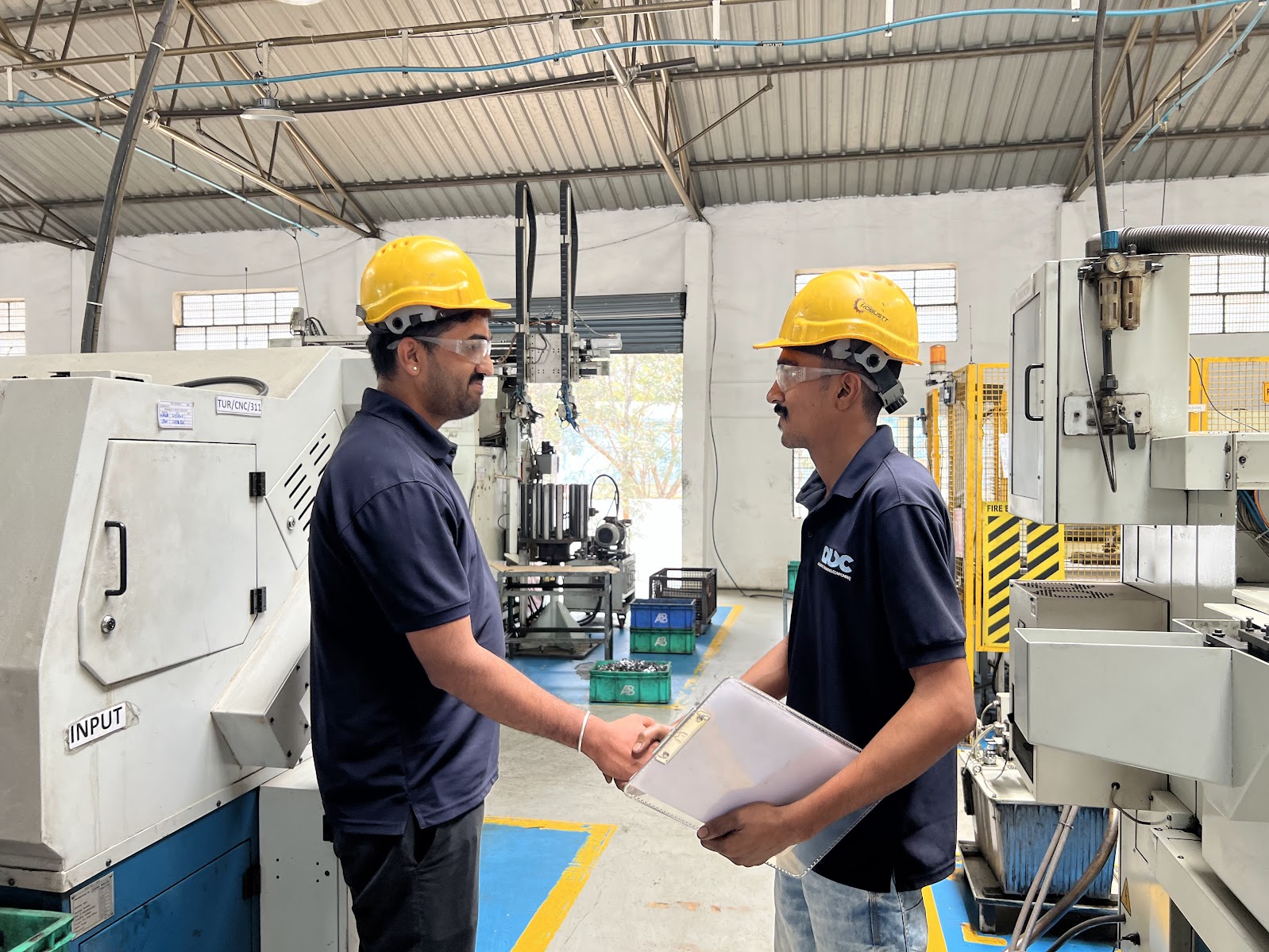
Ready to partner with a precision manufacturer you can trust?
Get a quote in 48 hours. PPAP-ready. IATF 16949 certified.